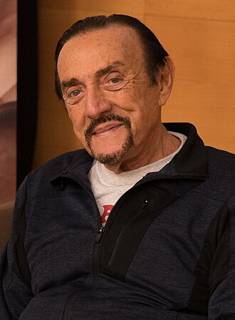
"We should be less interested in who is bad and more interested in what systems create bad behavior."Wisdom
"Personal growth requires us to honestly examine our capacity for harm."Life
"The path from good to evil is often paved with small compromises and rationalization."Truth
"We need heroes who resist the system, not heroes who perpetuate it."Leadership
"The anonymity provided by groups liberates us from our individual conscience."
"Teaching people to think critically about power structures is one of the greatest gifts we can give."Education
"Evil often wears the mask of authority and legitimacy."Justice
"Our need for connection and belonging can override our sense of right and wrong."Relationships
"The line between prison and freedom is often just a locked door."Freedom
"We must inoculate ourselves against the influence of corrupting systems."Strength
"The line between good and evil is permeable. We can all cross it."Philosophy
"Power corrupts, but the absence of power can corrupt absolutely in different ways."Power
"We are all capable of committing evil acts when circumstances align against our better nature."Truth
"The Stanford Prison Experiment revealed that institutions shape behavior more than we admit."Leadership
"Situational forces often override personal morality in ways we fail to recognize."Wisdom
"Heroes are not born; they are created by the choices made in critical moments."Courage
"We must acknowledge the 'Lucifer Effect' in ourselves to prevent its manifestation."Knowledge
"Social roles become internalized, transforming how we see ourselves and others."
"The dehumanization process begins subtly, with language and categorization."Justice
"Evil often hides behind bureaucracy and the diffusion of responsibility."History
"We are all capable of becoming perpetrators under the right conditions."Truth
"Understanding evil requires examining the systems that enable it, not just individuals."Philosophy
"Time transforms ordinary people into instruments of harm or heroism."Time
"The psychology of tyranny reveals how quickly freedom can be surrendered."Freedom
"What separates heroes from perpetrators is often the willingness to question authority."Courage
"Social pressures can override conscience more easily than we believe possible."Relationships
"The observer effect means we change systems simply by studying them."Science
"Mindlessness in institutional settings breeds moral disengagement."Education
"Power without accountability creates conditions for systemic abuse."Leadership
"The uniform and the role can erase the person underneath in troubling ways."